Classic Cozy Soft Lighting and Permanent LED Illumination Setup for Ageless Elegance
There is a particular sort of exterior illumination that never ever feels dated. It does not shout from the roofline or push color for the sake of novelty. It simply clears up onto a home with quiet confidence, giving the design shape after dark and making the whole property really feel taken care of. That look generally boils down to one option greater than any other: classic warm soft lights.
Homeowners usually begin the discussion by inquiring about benefit or resilience, particularly when they are considering Permanent LED Lights Installment. Those are practical worries. Nobody wants to drag ladders out every period, change half a strand in freezing weather condition, or uncover that the lights that looked stylish on-line feeling extreme and industrial by themselves residence. However the genuine decision is visual. The goal is not only to make lighting simple, it is to make it belong.
Done well, long-term lights goes away in daytime and adds deepness at night. Done improperly, it can flatten attractive trim, subject every roofline joint, and make a carefully developed home appear like a retail storefront. The difference normally has less to do with the innovation itself and even more to do with shade temperature level, component positioning, cord management, lowering control, and restraint.
Why cozy light still wins
Warm light has staying power due to the fact that it matches the products most homes are built from. Brick reads richer under warmer tones. All-natural wood, stone, repainted trim, copper gutters, and also dark house siding all have a tendency to look more improved when illuminated with a soft amber-white instead of a plain blue-white.
In useful terms, most home owners who desire a classic look gravitate toward color temperatures in the community of 2200K to 3000K. There is no magic number that suits every residence, however that array typically avoids the sterile cast that can make a house feel like a parking lot canopy. If the home has standard design, older stonework, or warm-toned outside surfaces, approaching the lower end of that array typically produces a gentler, more lovely effect.
I have actually seen this play out repetitively on site brows through. A house owner will claim they desire something "intense enough to be seen," which is easy to understand, particularly if they are replacing short-lived strings that usually obtain lost versus dark eaves. After that a test section rises in an amazing white tone, and the response is prompt. The roofline pops, yes, yet the house itself feels cooler. Swap that exact same section to a cozy soft setup and instantly the columns, soffits, and gables reclaim their character.
Brightness issues, but heat forms assumption. Individuals often tend to remain around illumination that really feels comfy. They appreciate lighting that feels intentional.
Permanent does not need to suggest flashy
The phrase Permanent Vacation Lights occasionally brings an extremely details photo to mind: color-changing bulbs, computer animated patterns, and app-controlled scenes for every holiday on the schedule. Those systems absolutely belong. They are fun, flexible, and increasingly dependable. Yet many homeowners overlook a quieter truth. The very same framework that can celebrate a holiday can likewise supply classy architectural lights every night of the year.
That is where Irreversible LED Illumination Installment ends up being a lot more interesting than seasonal design. An appropriately created system can move between functions. In December, it might support joyful scenes. In the other eleven months, it can work out into a polished warm white profile that provides the home deepness and visibility. The innovation is flexible, but the aesthetic identification remains grounded.
The best tasks deal with programmable shade as an alternative, not the whole personality of the installment. If the house only looks excellent when the lights are computer animated, the layout misunderstood. A strong illumination plan must look beautiful in its easiest setup, with static timeless warm soft lights at a controlled intensity.
What ageless beauty really resembles on a house
Timeless lights is seldom consistent in a simple way. It is well balanced. It appreciates the design rather than mapping every line with the same aesthetic weight.
For example, a long ranch home with a reduced roofline take advantage of refined continuity and a gentle laundry of warm light that keeps the framework from vanishing into the landscape. A tall colonial or craftsman can manage much more upright focus, specifically around entrance attributes, dormers, or a main gable. A modern farmhouse frequently looks best when the lights sustains the balance without over-illuminating the garage.
The common thread is proportion. If every eave is just as brilliant, the eye has nowhere to rest. If the front entry is underlit while secondary lines blaze away, the house loses hierarchy. Good permanent lights creates order after dark. It helps a site visitor recognize where to look initially, where to stroll, and what makes the design special.
The details that divide beauty from excess
A classic installation typically depends upon a handful of layout choices collaborating:
- Conceal the components so the light is seen more than the equipment
- Choose cozy white as the default scene, with dimming readily available
- Match brightness to the home's scale instead of maxing out result
- Emphasize major architectural lines, not every possible edge
- Keep spacing regular, specifically on very noticeable front elevations
None of these points are complicated on paper. In method, nevertheless, each needs judgment. Two-inch modifications in obstacle can alter glare. Component spacing that looks also from a ladder may review uneven from the street. A setup that really feels tasteful at 8:00 p.m. May be as well intense by 11:00 p.m. When the neighborhood has gone quiet.
That is why mockups issue. On far better tasks, installers evaluate a little section at dusk rather than making presumptions completely daylight.
The composition of an excellent Permanent LED Lighting Installation
Homeowners commonly focus on the noticeable outcome, yet the unseen decisions determine whether the system will certainly mature well. Installing approach, cable television transmitting, controller place, weatherproofing, service accessibility, and power preparation all issue equally as long as the light output.
A clean installment typically begins with placement under soffits, fascia lips, or trim details that protect the diode from direct sight. This is not just regarding appearance. Protected placement softens the impact and decreases pinpoints of glow when someone approaches from the driveway or sidewalk. If the components are as well exposed, also cozy soft lights can feel sharp.
Wire monitoring is another area where workmanship shows. On a well-finished home, sloppy cabling stands apart right away in daytime. The very best installers path discreetly, color-match where appropriate, and avoid creating upkeep headaches by hiding vital connections where they can not be gotten to later.
Power and control systems should have equal attention. A large building may require zoning to ensure that lengthy rooflines, access locations, garage wings, and landscape-adjacent areas can be managed smartly. This is not just useful for custom scenes. It additionally aids with repairing and maintains voltage performance a lot more steady across the system.
Weather exposure adds another layer. South-facing elevations, coastal air, hefty snow areas, and high-heat attic-adjacent soffits each placed various anxiety on materials. An item that executes well in one atmosphere might need additional care or a different placing method in another. That is one factor blanket suggestions online has a tendency to let down. Climate constantly gets a vote.
Warm light and LED technology are no longer at odds
Years back, some long-term systems had a hard time to mimic the inviting top quality of conventional incandescent vacation lights. The outcome might feel also crisp or too digital, specifically when seen straight. That space has narrowed considerably. Better diode top quality, stronger diffuser style, and a lot more nuanced controllers have made it feasible to attain a softer aesthetic outcome, especially when cozy white networks are adjusted properly.
Still, not every LED system produces the same type of warmth. Some "cozy white" presets lean peach, others drift green at reduced dim levels, and some lose their elegance when watched from a range due to the fact that the spacing or lensing creates a dotted impact rather than a continuous radiance. This is one location where seeing real installed instances assists greater than reading specifications.
I generally urge homeowners to ask what the system appears like from three placements: straight under the eave, across the street, and from an angle as they pull right into the driveway. An illumination arrangement can do perfectly from one of those perspectives and dissatisfy from one more. The objective is uniformity in lived experience, not simply a good photograph.
The role of dimming, timing, and seasonal restraint
One of the most significant benefits of Permanent Vacation Lights is control. Paradoxically, that very same flexibility creates numerous frustrating outcomes. Even if a system can display lots of colors and complete illumination does not indicate it should.
Warm white illumination commonly looks ideal when dimmed below what novice buyers expect. A slightly lower setup gives the house a radiance as opposed to a glow. It also reads as more expensive. Deluxe resorts and high-end property tasks have comprehended this for life. Comfy light is generally not the brightest light available.
Timing also transforms how lighting is perceived. A front elevation that looks welcoming from sundown to 10:00 p.m. May really feel extreme if it melts unchanged until dawn. Smart scheduling allows a home to be visually present during the energetic night hours and quieter later on in the evening. Some owners use one degree for sundown to going to bed, after that step down immediately. That is a subtle action, however it makes the residential or commercial property really feel extra sophisticated and considerate.
Seasonal restraint issues too. A home can definitely change right into even more commemorative scenes for holidays and special events, however those minutes feel a lot more special when they contrast with a classy daily baseline. If the system is constantly running at spectacle setting, the novelty discolors quickly.
Matching the lighting to the architecture
A lights design that flatters a Tudor resurgence might not fit a streamlined contemporary build. The architecture needs to inform you where to be bold and where to hold back.
Traditional homes often gain from heat, softness, and strong attention to symmetry. The front door, veranda columns, and major roofline should have aesthetic priority. Accent illumination can support dormers or heights, however the treatment must remain measured.
Contemporary homes generally ask for accuracy. Cleaner lines, deeper overhangs, and darker exteriors can bring a slightly crisper presentation, though warm white still tends to really feel more property and less institutional. On these residential properties, even spacing and flawless alignment ended up being specifically essential due to the fact that the style itself is so exacting.
Rustic and farmhouse designs compensate warmth maybe greater than any kind of other classification. These homes can look charming with classic cozy soft lights that resemble the familiar comfort of incandescent porch lamps. However they can additionally look exaggerated promptly if every barn-style line and secondary gable is lit up at equal strength.
If a residence has several masses, such as a main body, a garage wing, and a porch addition, the lights ought to recognize that hierarchy. The text usually is entitled to importance. The garage can sustain, not control. This sounds obvious, yet a lot of installations accidentally make the garage the celebrity due to the fact that it provides the lengthiest nonstop roofline.
What house owners must ask prior to working with an installer
The high quality void in this market is genuine. Products vary, yet craftsmanship differs much more. A home owner does not need to come to be an illumination engineer, though a couple of useful concerns can disclose whether an installer is believing past a quick sale.
- Where will the components rest, and will they show up from the road in daytime
- What warm white array does the system produce, and can it be dimmed conveniently
- How are cords, connectors, and power products safeguarded and accessed for service
- Can the installer show local instances of homes utilizing understated day-to-day settings
- What is covered if an area stops working, fades, or behaves inconsistently over time
The solutions matter. So does the confidence behind them. Experienced installers usually explain compromises without overselling perfection. They recognize older soffits may require added treatment. They know high heights or combined products can complicate balance. They understand that app benefit does not compensate for bad physical layout.
A trustworthy professional likewise talks about what not to light. That is often the clearest indicator they respect the final appearance.
Budget, worth, and where the money really goes
Permanent LED Illumination Installment is not a bargain-bin purchase, and it should not be examined like short-lived seasonal décor. Costs depend on straight video, roof covering complexity, availability, controller refinement, item quality, and local labor rates. An easy single-story run is something. https://outdoorselection053.quillnesty.com/posts/why-permanent-vacation-lights-are-altering-home-exterior-layout A multi-gable two-story façade with challenging access and several power areas is another.
What house owners are actually spending for falls into three classifications: the hardware, the installment ability, and the long-term convenience. The equipment gets focus because it is tangible. The installation ability is entitled to more of the credit report. Clean placement, long lasting attachment, very discreet circuitry, proper weatherproofing, and dependable control setup are what identify whether the system still feels like a good choice years later.
There is also a value part that does disappoint up neatly on a spread sheet. Seasonal arrangement and elimination carry their very own costs, whether gauged in specialist service charge, individual time, or physical risk. For numerous families, specifically those with taller homes or restricted movement, getting rid of ladders is not a deluxe. It is the whole point.
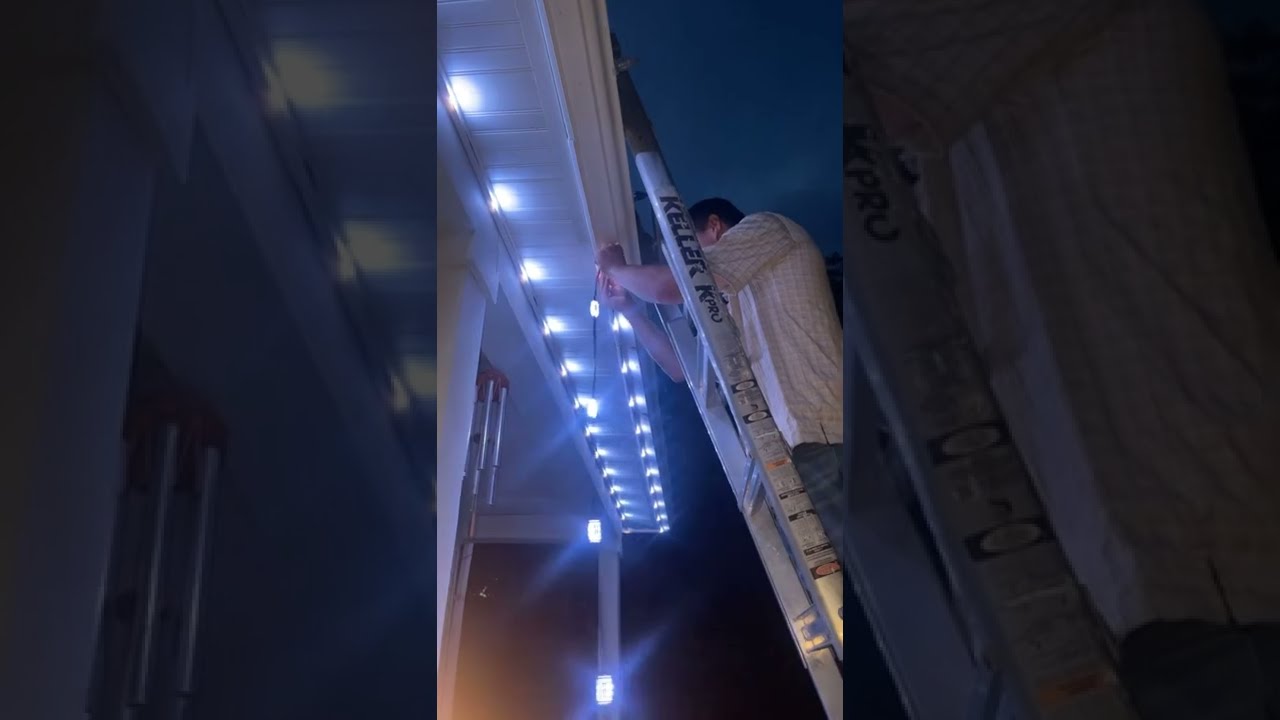
The return is not simply useful, though. A well-lit home adjustments how the residential or commercial property is experienced. It can make an access feel warmer, an exterior feel a lot more ended up, and evening aesthetic charm really feel intentional rather than accidental.

Common blunders that age a lighting job quickly
The initially blunder is picking awesome white due to the fact that it seems brighter during a trial. It frequently is brighter, a minimum of perceptually. It is additionally more likely to really feel dated or industrial in time on a residence.
The second is over-lighting. Several homes require less intensity than their proprietors expect. When the eye can see each point resource plainly from the curb, the layout normally requires either extra camouflage, even more dimming, or both.
The 3rd is ignoring daytime look. Permanent systems reside on the home 365 days a year. If the track, lens, or cord is aesthetically intrusive in sunshine, the project compromises the exterior also when the lights are off.
The fourth is chasing after pattern scenes at the cost of an elegant default. If the application teems with effects however the warm white mode looks weak, harsh, or uneven, the system will certainly not deliver the timeless style most owners really want.
Finally, poor maintenance planning overtakes people. Every irreversible system ultimately requires some solution. Elements age. Storms happen. Firmware changes. If access is difficult or documents is missing out on, little issues become expensive ones.
A home need to still seem like itself at night
That is the requirement I return to frequently. Good lighting reveals the house. Excellent lighting protects its identity.
When homeowners select classic warm soft lights for their irreversible system, they are commonly replying to that impulse, also if they do not phrase it in this way. They want comfort, yes. They desire the adaptability of Permanent Vacation Lights, yes. But more than that, they desire the house to stay sophisticated, familiar, and welcoming after sunset.
The technology has gotten to a point where that is really attainable. A Long-term LED Illumination Installation no more has to look staged or short-lived. With careful layout, thoughtful placement, and regimented control setups, it can enter into the style itself, nearly invisible by day and quietly transformative by night.
The homes that age best with irreversible lights are not constantly the greatest or the newest. They are the ones where someone made a series of sensible, controlled decisions. Heat over glow. Proportion over excess. Craftsmanship over shortcuts. Those selections rarely order interest in a display room, but they are specifically what produces the type of nighttime elegance that still feels right five years later.